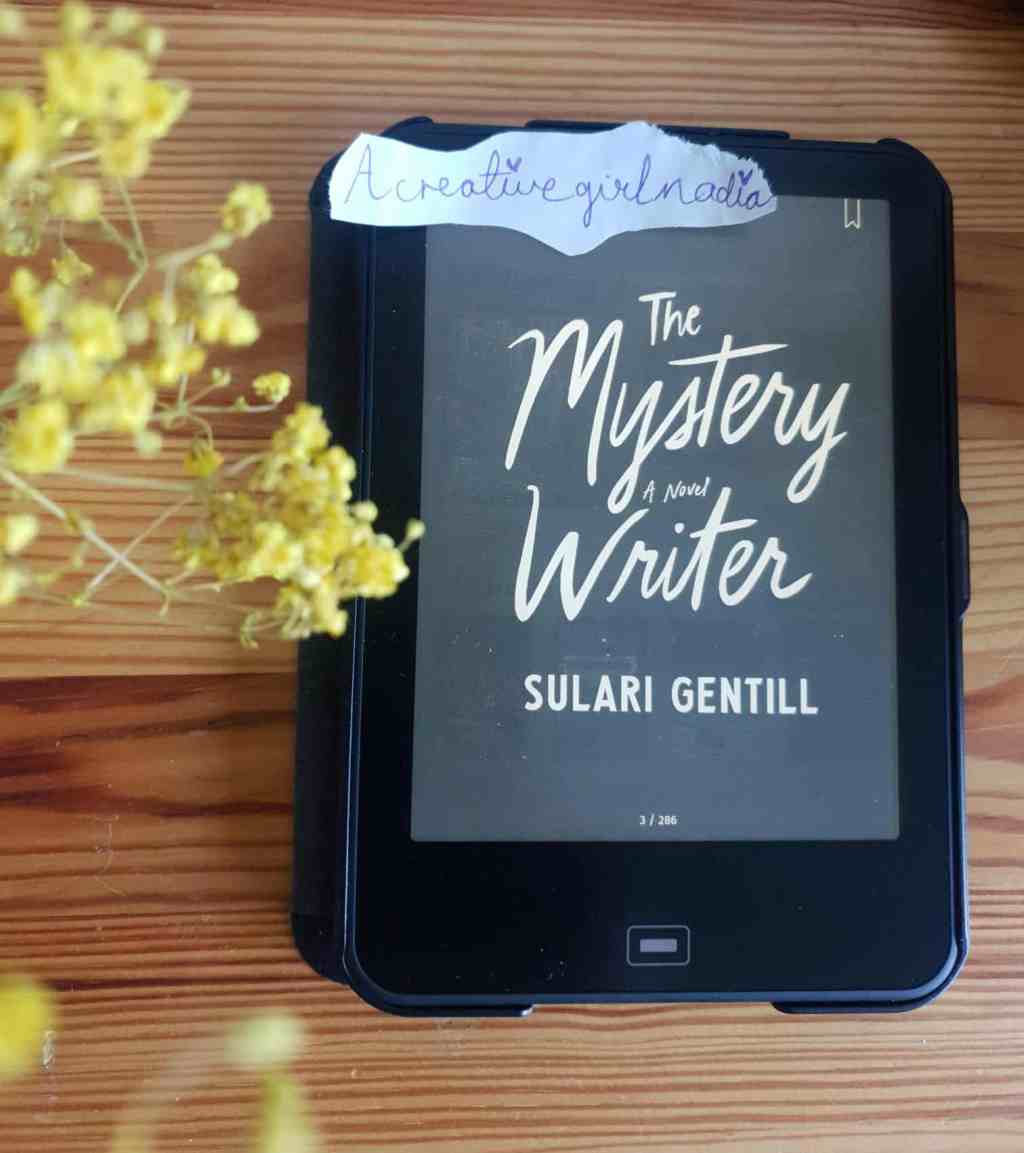
‘The Mystery Writer’ by Sulari Gentill is a page-turning murder mystery that touches on topical themes in our current post-covid world. While I felt the end was hurried, I enjoyed the first half’s build-up to the twist at the end. While none of the characters, especially Theo, were physically described in detail, I feel like this plays into the meta nature of ‘The Mystery Writer’ – Theo discusses how she never describes her own characters in her writing as she wants them to remain subjective to the reader (“Making your protagonist a blank slate canvas allows you to reflect that; it allows the readers to find themselves in your characters and perhaps to recognize their own biases”, page 23).
The themes of this novel are as follows:
Parasocial relationships
At first, Theo is under the impression that Dan Murdoch’s obsessed fans are to blame for his death. It makes you consider the parasocial relationships between fans and their idols and the potentially harmful consequences that can come from these. For instance, Theo’s brother, Gus, notes that: “The public’s interest in the lives of writers had increased with the accessibility afforded by social media and the web in general, but the very accessibility was dangerous.” (p. 234). The fact social media has blurred the lines between reality and fiction affects how close a person feels to the celebrity they have never met but idolised online. Take, for example, the horrific tragedy that befell Christina Grimmie and the hands of one of her so-called fans.
This not only means that ordinary people feel entitled to the private lives of celebrities, but it also leads to the ability to manufacture how one presents themselves online. For instance, in ‘The Mystery Writer’, the authors’ agents run the social media accounts for authors.
Separation between art and artist
In ‘The Mystery Writer’, Gentill presents the concept of PR-run social media accounts to manage damage control. We are now living in a world where we are slowly coming to terms with the reality of problematic celebrities who otherwise portray themselves, and are thus perceived, in a very different light until allegations or problematic stances arise. Stars like J.K. Rowling or Lizzo are perfect examples of this phenomenon.
Conspiracy theory-fuelled forums, doomsday preppers
Gentill, p. 189
“My mother is getting ready for a war—civil, or some kind of invasion; Zeke thinks there’ll be another worldwide pandemic or several; Sam is convinced that electromagnetic solar pulses will render all forms of technology inoperative leading to a breakdown of the social order; and I think Caleb still believes in zombies…”
The story is peppered with snippets of chats between conspiracy forum members, one of them being Caleb, whose account we begin with at the start of the book. Although only one of the branches of this story, I found it interesting how it intertwined with the main narrative. Especially as the belief in conspiracy theories has intensified in recent years.
“…fictional narratives could be used to influence people into all sorts of things, to vicariously control democracy.”
Gentill, (p. 275)
This is an advance copy gifted to me by NetGalley and Poisoned Pen Press.


 ACreativeGirlNadia
Leave a comment