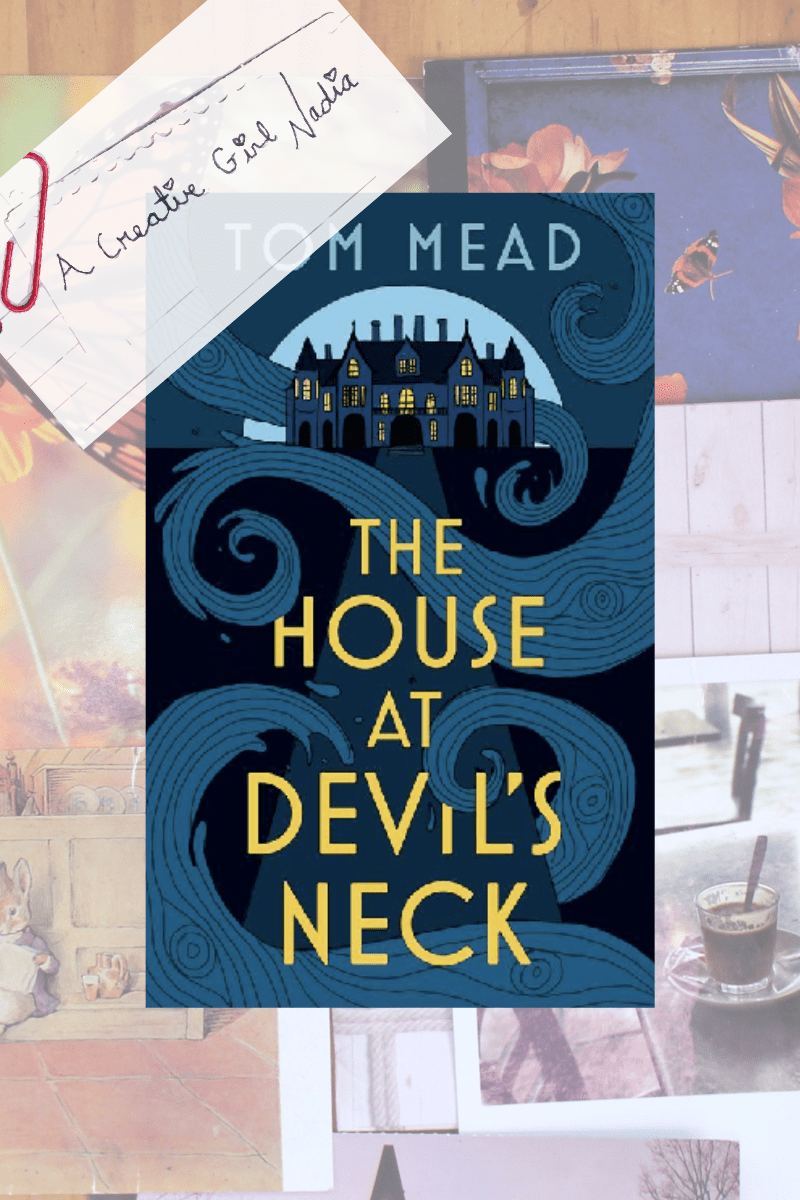
The House at Devil’s Neck by Tom Mead
Synopsis
An apparent suicide in a London townhouse uncannily mirrors a similar incident from twenty-five years ago, prompting Scotland Yard’s George Flint to delve deep into the past in search of the solution to a long-forgotten mystery.

Meanwhile, Joseph Spector travels with a coach party through the rainy English countryside to visit an allegedly haunted house on a lonely island called Devil’s Neck. The house, first built by a notorious alchemist and occultist, was later used as a field hospital in the First World War before falling into disrepair. The visitors hold a seance to conjure the spirit of a long-dead soldier. But when a storm floods the narrow causeway connecting Devil’s Neck to the mainland, they find themselves stranded in the haunted house. Before long, the guests begin to die one by one, and it seems that the only possible culprit is the phantom soldier.

Flint’s and Spector’s investigations are in fact closely linked, but it is only when the duo are reunited at the storm-lashed Devil’s Neck that the truth is finally revealed. Tom Mead once again creates a brilliant homage to John Dickson Carr and the Golden Age of mysteries with this intricately plotted puzzle.
Review
This Agatha–Christie-style locked-room murder mystery was a little out of my reading comfort zone but entertaining all the same.
I loved the character list (dramatis personae) introducing the cast of protagonists of the mystery. It brilliantly added to the text’s theatricalism.
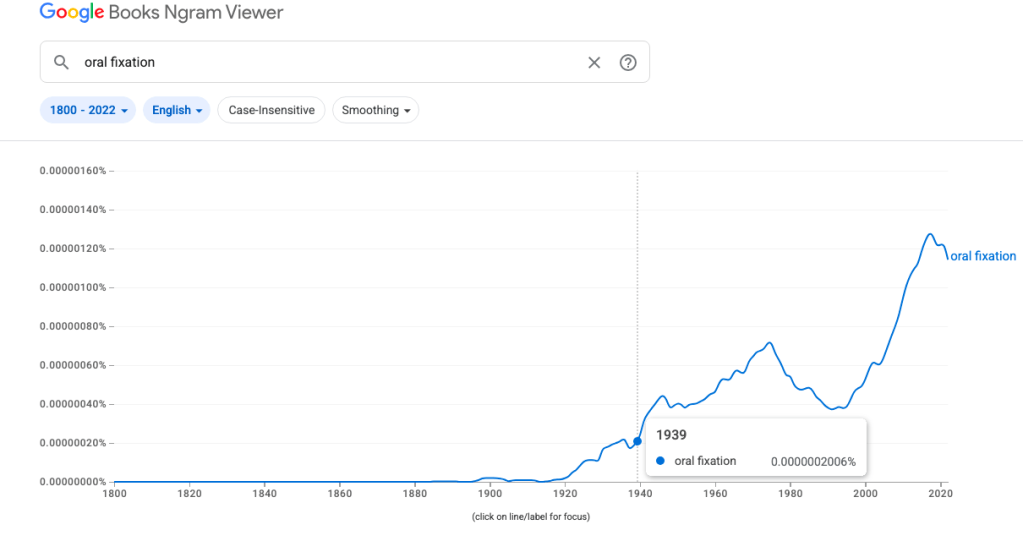
I did feel that the narrative was at times convoluted, and I found some of the terminology to be anachronistic. For instance, terms such as “oral fixation”, “expat”, and “hungover” are used.
Below are the plotted graphs for the diachronic usage of the above terms according to the Google Books Ngram Viewer. As you can see, although these terms do crop up in 1939, when this mystery takes place, they were barely in common usage.


While the third part of the novel does get much better and faster in pace, a level of suspension of disbelief is required as Flint’s deductions come seemingly out of nowhere.
The final reveal was very interesting although it did turn into a double twist, which, in my opinion, furthered the slightly over complicated nature of the novel.
Star rating
Thank you to Netgalley and Head of Zeus (Aries Fiction) for this advance reader copy.
BUY HERE: https://bookshop.org/a/111163/9781613166505



 ACreativeGirlNadia
Leave a comment